Music Therapy
What is Music Therapy?
Music Therapy is the skillful use of music and musical elements by an accredited Music Therapist to promote, restore, and maintain mental, physical, emotional and spiritual health. Music therapists seek to promote wellness for all persons. Music has non-verbal, creative, structural and emotive qualities. These elements are used in the therapeutic relationship to facilitate contact, interaction, self-awareness, learning, self-expression, communication and self-development. (CAMT 1994)
Music therapy is regulated by the CAMT (Canadian Association of Music Therapy), established in 1974.
Communication is the key means by which Music Therapy develops, and usually occurs in a nonverbal manner. In supporting an individual, while exploring their creativity and expression, we enhance quality of life and empower a person by facilitating new skills, through processes and pathways to accomplishment. An Accredited Music Therapist will use a variety of interventions or techniques that are chosen to assist each unique client and situation. Therapy can be in a group or individual program, at any age, and the approaches may include instrument improvisation, songwriting, music supporting movement, music as pain intervention, speech and language training, cognitive training and listening to music.
Music Therapists work in medical hospitals, rehabilitation facilities, residences, senior centres, hospices, correctional facilities, schools, psychiatric hospitals, outpatient clinics, day care treatment centres and private practice. Specialized programs are developed based on the latest evidence-based research, and incorporate treatment that a person may already be receiving.
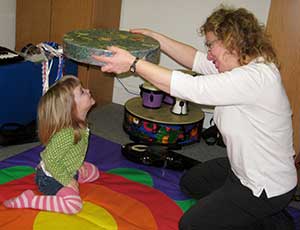 Sessions are most frequently organized to take place at a regular day and time, for a short term contract of 12 weeks or more, or throughout a school or calendar year. Sessions are followed by charting notes, and when required a report. For rate information, please refer to rates on my site.
For heights and depths no words can reach, music is the soul's own speech.
What is an Accredited Music Therapist?
A music therapist is an accomplished musician and a graduate of an approved music therapy degree program. Music Therapist Accredited (MTA) is granted to those who have completed all academic requirements, including a 1000-hour internship and have been approved by the Canadian Association for Music Therapy (CAMT). Following the internship, the intern submits a written portfolio including a case study. Upon approval from the CAMT Accreditation Review Board, the intern is given the title Music Therapist Accredited, MTA. An MTA maintains their credential every five years in a continuing education process.
FAQ
Q: What is a typical music therapy session like?
A: Music therapists serve a wide variety of people with many different needs, so each session is unique to each client. The treatment plan is based on music selected by the client. Individual sessions are provided that range from 30 minutes to one hour.
Q: Do I have to know how to play an instrument?
A: No knowledge or past experience of music is required by the client. A Music Therapist meets the individual through music in many forms.
Q: What kinds of things are part of a session?
A: There is a large quantity of things that can be done through music, for example:
- Music listening and appreciation; in reflecting upon lyrics or music, recalling music associated with significant people or events in ones life.
- Improvisation; offers an enjoyable way of relating to each other and provides a fulfilling means of self-expression.
- Song writing; writing music and/or lyrics to precomposed songs with the assistance of the music therapist.
- Guided relaxation through music; with the assistance of the music therapist, a session in relaxation can be helpful in controlling anxiety or pain.
Q: Who can benefit from music therapy?
A: All ages of people, from infants to the elderly benefit from Music Therapy. This specialized therapy assists people with a wide spectrum of challenges at any stage of life.
Q: Is Music Therapy just for individuals?
A: The benefits reach groups as well as individuals. Stress in the workplace, team building, and group social skills are a very important part of our service.
Home | About Me | Counselling Services | Music Therapy | Research & Links | Contact